Monaco's Rock Protection Law: What State Pre-emption Changes in Monaco-Ville
Publié par Paolo Petrini le 14/10/2026
Temps de lecture
38
min.
Taxation and Legislation
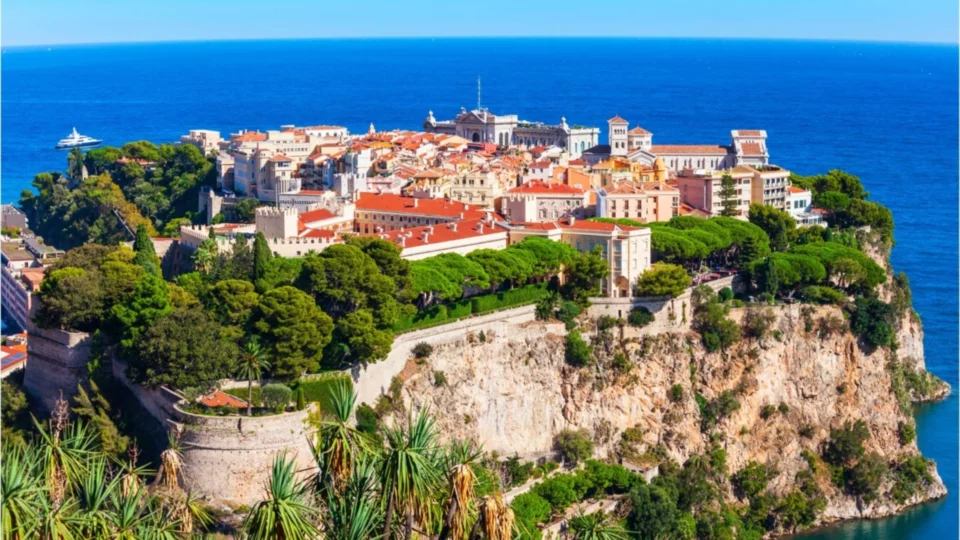
With the bill passed on 12 October 2026, the Rock of Monaco (Monaco-Ville) becomes the only district of the Principality where the State will be able, from the day the law is published in the Journal de Monaco, to step into the shoes of a property's buyer, challenge the agreed price, and authorise or refuse any change of use of a property.
Discover our selection of apartments
for sale in Monaco
for sale in Monaco
Studios, one- to five-bedroom apartments, penthouses and prestigious properties
Bill No. 1134 on the protection of the Rock was tabled by the Prince's Government on 6 October 2026 with a declaration of urgency, and adopted by the Conseil National, Monaco's parliament, on 12 October 2026, six days later, after amendments. Its 50 articles bring together, for the first time within a single district, three instruments: a State right of pre-emption over transfers, control over the designated use of premises and a tightened regime for building works. As we write, the text as voted is not yet in force: it must be promulgated by the Sovereign Prince and then published in the Journal de Monaco, the Principality's official gazette, where it will receive its final law number. That publication is what will trigger the whole mechanism, and everything that follows describes the text as passed, subject to that step.
For an owner or a buyer in the Monaco-Ville district, the question is no longer simply one of finding a property or a purchaser. It is now one of understanding when the State enters the transaction, what it can do with the agreed price, and what an owner retains the right to refuse. A British or American reader will recognise something close to a right of first refusal, with one difference that changes everything: here the right is held by the State, over an entire district, rather than by a co-owner or a tenant over a single property. That is the subject of this analysis, written from the consolidated text and the committee report, before any implementing measure. It is the reading of a property professional who advises clients, not legal advice: on a specific file, the notary remains the adviser whose word is binding.
Key Takeaways: the Monaco Rock protection law
Bill No. 1134 will create a legal regime specific to Monaco-Ville. It will apply to no other district of the Principality and will enter into force only once promulgated and published in the Journal de Monaco.
- The text was tabled on 6 October 2026 under a declaration of urgency and passed by the Conseil National on 12 October 2026, with amendments that strengthen the guarantees given to owners.
- Any sale of a property on the Rock, including the transfer of a majority of the shares in a company that owns it, will have to be declared to the State before signing; the State will have one month to waive its right, buy at the declared price or propose a different price.
- An owner can never be compelled to sell to the State at a price that has not been expressly accepted: the property may be withdrawn from sale at any time, without compensation or penalty.
- Where the price is disputed, a conciliation committee and then the Tribunal de première instance, Monaco's court of first instance, will determine the market value of the property as at the date of the declaration; the costs of that procedure will be borne by the State.
- Sales completed without a declaration will be void, and the State will be able to seek annulment for five years; the notary will not be able to execute the deed without proof that the State has waived its right.
- A change of use of premises, short-term furnished letting, the merging or division of dwellings and works affecting the appearance of a building will all require authorisation; breaches will expose the offender to an administrative fine of up to €100,000.
- Sales covered, before the law is published, by a preliminary agreement or compromis bearing a date certaine, meaning a date established by a notarial deed or official registration rather than by the parties alone, will escape pre-emption, provided they complete between the same parties, at the same price and on the same terms.
- The Rock is the narrowest market in Monaco: 8 resales in 2025 according to IMSEE, the Principality's statistics institute, and advertised prices recorded by Petrini Exclusive Real Estate at €46,523/sq m in July 2026, against €59,942/sq m for the Principality as a whole.
Petrini tip: on the Rock, negotiations will now have to be fully concluded before the declaration is made to the State. Any later change to the price, the buyer or the buyer's beneficial owners reopens the pre-emption procedure.
Why did the Government want an emergency law for the Rock?
The Prince's Government considers that pressure on land and property in the Principality is now concentrated on Monaco-Ville with unprecedented intensity, and that existing law does not give it the means to respond.
The explanatory memorandum, available in the Conseil National's legislative file for Bill No. 1134, and the statements made before the Assembly on 7 October 2026 by the Minister of State (Ministre d'État, the head of the Prince's Government) describe four phenomena: successive acquisitions of buildings and properties, plans to convert dwellings into furnished lets for a transient clientele, the replacement of neighbourhood shops by businesses aimed at visitors, and heavy renovations that alter a property's legal status and open the way to a change of use. Taken in isolation, each of these projects may comply with the rules in force. It is their accumulation that the State judges capable of irreversibly transforming the district that houses the Prince's Palace, the Cathedral and the seat of the institutions.
Article 1 of the text sets the framework: the protection of the Rock constitutes an overriding objective of general interest of which the State is the guarantor, and that objective justifies a legal regime of its own. The same article specifies that these powers are exercised in compliance with Article 24 of the Constitution of 17 December 1962, which guarantees the right of property, and that they may limit that right only to the extent necessary and proportionate. A large part of the parliamentary debate turned on that balance.
The urgent procedure is explained by what the Minister of State called the announcement effect: between the tabling of the text and its publication, any sale concluded, any change of use carried out and any authorisation obtained escapes the law for good. The Conseil National was careful to state, in its committee report of 12 October 2026, that urgency did not turn it into a rubber stamp, and it amended the text on many points. What remains is to understand, in practical terms, what this text changes for someone who sells.
Which sales will be subject to the State's right of pre-emption?
Any transfer for value of a property located on the Rock will be subject to the right of pre-emption, whether it concerns the bricks and mortar, the shares of a company that owns them, or a business.
Article 4 covers first the sale of built or unbuilt property, of units in a co-owned building, of undivided interests and of rights in rem, including exchange, transfer in lieu of payment and contribution to a company, a trust, a foundation or a fiducie, the civil-law fiduciary arrangement. It then covers transfers of shares or stock that give the buyer, directly or indirectly, a majority of the capital or of the voting rights of a company more than half of whose assets, by value, consist of property located on the Rock. That rule applies whatever the country in which the company has its seat and whatever law governs it. Finally, it covers transfers of businesses (fonds de commerce), of artisan businesses and of leasehold rights, as well as sales by auction and disposals in insolvency proceedings.
The perimeter is that of the Monaco-Ville district, including the ramparts, glacis, cliffs, gardens and the fishermen's path, to be defined by a plan published by Sovereign Ordinance (ordonnance souveraine, the executive instrument signed by the Prince). A property lying only partly within that perimeter is subject to the regime in its entirety.
The exclusions in Article 5 are limited: sales to a spouse, to a partner under a civil partnership contract, to ascendants, descendants, brothers and sisters, partitions, sales to the State or to the Commune, and the transfer of a business to an employee of more than three years' standing. Gifts are not covered. The committee report nevertheless specifies that a disguised gift, or one subject to charges equivalent to a price, would be treated as a sale, with nullity and criminal sanction to follow.
Two amendments deserve the attention of those who hold property through a company. Approval clauses in articles of association cannot be relied on against the State when it pre-empts shares. In return, each minority shareholder may, within six months of the State's acquisition, require it to buy out their own shares at the same price per share. For foreign companies, it is the approved representative provided for by Law No. 1.381 of 29 June 2011 who must file the declaration before any transfer. Once the scope is set, the question becomes one of process: what happens between the signing of an agreement and the signing of the deed?
How will a sale on the Rock proceed once the law is published?
A sale may be signed only after a prior declaration has been made to the State and a period of one month has expired, during which the State will choose between waiving its right, buying at the declared price and proposing a different price.
The declaration is addressed to the Minister of State by the owner or by the notary. It states the identity of the seller and of the prospective buyer, including the beneficial owners of any legal entity, the description of the property, its current use and the use the buyer intends, the price, the terms, the occupancy position and any current leases. The Minister of State informs the Conseil National. As long as no decision to acquire at the declared price has been notified, the owner may withdraw the declaration.
The response period is one month. Within the first fifteen days, the State may, once only, request additional documents or a visit to the property; the period is then suspended and resumes, for its remaining duration, on receipt of the documents or on the date of the visit. The committee deleted the original wording, which restarted a full month after suspension. Silence from the State at the end of the period counts as a waiver.
Three outcomes are possible. If the State waives its right, the owner may sell at the declared price and terms for six months. If the State decides to acquire at the declared price, the sale is complete upon notification, and the original buyer is displaced. If the State proposes a different price, it must give reasons for its offer, state the general-interest purpose pursued, describe the specific project it intends to carry out and set out the elements on which it based its price. It is this third scenario that concentrates all the questions.
Will the State be able to impose a price below the agreed one?
No. The State will be able to propose a lower price, but no provision of the text allows an owner to be compelled to sell at a price that has not been expressly accepted.
When the State offers a different price, the owner has two months to accept that price, to maintain the original price and accept a procedure to determine it, or to withdraw from the sale. Silence counts as withdrawal. Withdrawal gives the State no right over the property, and the owner may file a new declaration later. Readers familiar with compulsory purchase in the United Kingdom or eminent domain in the United States should set that comparison aside here: both end in a transfer the owner cannot prevent, whereas the Monaco text never allows a forced sale and leaves the owner free to withdraw until the very end.
If the owner maintains the price, a conciliation and valuation committee is convened. It is made up of a chair chosen by mutual agreement from among persons offering guarantees of independence and of expertise in Monaco property, one member appointed by the State and one member appointed by the owner. Within two months it delivers a reasoned opinion on the market value of the property. That opinion binds no one. Failing agreement within the following fifteen days, the State has fifteen days to bring the matter before the Tribunal de première instance; if it does not, it is deemed to have waived its right.
The court then determines the market value of the property as at the date of the declaration, not the date of judgment, an amendment designed to neutralise any fall in value in the meantime. It takes into account the property's composition, location and condition, its designated use and the uses open to it under the applicable rules, comparable transactions on the Monaco market, the charges encumbering it and its occupancy position. The price set may not be lower than that market value. Judgment is delivered within six months, and any appeal is decided within the following six months.
Once the decision is final, each party has one month to accept the price or withdraw. The sale is complete only if both the State and the owner accept. Until that period expires, the owner may withdraw the property from sale by simple notification, with no compensation or penalty. The costs of the committee, the expert valuations, the advisers, the deed and the court proceedings are borne by the State. And if the State withdraws after the court has set the price, it may no longer pre-empt the same property, from the same owner, for two years, unless it buys at the price the owner had declared.
The full mechanism is set out in Articles 11 to 15 of the consolidated text passed on 12 October 2026, and the committee report indicates that it was the subject of lengthy debate. Some members considered limiting pre-emption to the declared price and terms, before the committee chose to keep the mechanism in view of the purpose of the text. To measure what this means in a real transaction, nothing beats a few concrete situations.
The pre-emption timetable, step by step
Source: Bill No. 1134 on the protection of the Rock of Monaco, consolidated text passed on 12 October 2026, Articles 7 to 18.
| Step | Time limit | What happens on expiry |
|---|---|---|
| State's response to the declaration | 1 month, suspended once by a request for documents or a visit made within the first 15 days | Silence counts as a waiver |
| Owner's response to a State offer at a different price | 2 months | Silence counts as withdrawal from the sale |
| Opinion of the conciliation and valuation committee | 2 months | Non-binding opinion on market value |
| Referral to the court by the State | 15 days after conciliation fails | Failing that, the State is deemed to have waived its right |
| Judgment, then appeal ruling | 6 months each | Market value set as at the date of the declaration |
| Acceptance or withdrawal by the parties | 1 month after the final decision | Sale complete only if both parties accept |
| Notarial deed and payment | 3 months after the sale becomes complete | If the State fails to act, the pre-emption lapses and the State is barred from pre-empting the same property for 5 years |
Table by Petrini Exclusive Real Estate Monaco. The time limits are those of the text as passed; suspensions and appeal periods may lengthen them.
Three worked examples to understand pre-emption on the Rock
The three situations below are teaching examples with fictional figures, set after the law has been published. They illustrate how the text operates and describe neither a real transaction nor a price level for the district.
Case 1: the State waives its right
An owner accepts an offer of €10 million for an apartment in Monaco-Ville. The notary sends the declaration to the Minister of State. On the fourteenth day, the administration requests documents, which it receives five days later; the clock restarts for the remaining days. The State notifies its waiver, or remains silent. The sale is signed at the declared price and terms, within six months. For the parties, the only effect of the law will have been a month and a half of waiting.
Case 2: the State buys at the declared price
Same property, same offer of €10 million. Within the month, the State notifies its decision to acquire at the declared price, relying on one of the five purposes in Article 3, for example the preservation of permanent housing. The sale to the State is complete on the date of that notification. The seller receives the price; the original buyer is displaced, and it falls to the sale agreement to provide for what then happens to the deposit. If the State does not use the property in accordance with the purpose invoked within ten years, it must offer it first to the former owner, then to the displaced buyer, at a price that may not exceed what it paid, plus the cost of works.
Case 3: the State offers less
Same property, same offer, but the State proposes €8 million, with the elements underpinning that price. The seller has three options. Accept, and sell to the State. Withdraw, and keep the property; the seller then cannot sell to the original buyer at €10 million without filing a new declaration, to which the State may respond in the same way. Or maintain the price and let the committee, then the court, determine the market value as at the date of the declaration. If that value is set at €10 million, the State buys at that price or withdraws, and in the latter case it may no longer pre-empt the property for two years: the sale to the original buyer becomes possible again. If the value is set lower, the seller may refuse and withdraw the property. In every case the seller's procedural costs are borne by the State, but the total duration may approach two years, and nothing obliges the original buyer to wait.
This third case shows where the real issue lies: not in a loss imposed on the seller, which the text rules out, but in time and in the robustness of the price. A price that a judge would recognise as the property's market value is protected; a price that departs from it exposes the seller to a counter-offer and a long period of immobilisation. Behind these textbook cases, owners on the Rock ask more direct questions.
You own property on the Rock: the six questions you are asking
If your property lies within the Monaco-Ville perimeter, you will be affected from the day the law is published, but most of the obligations arise only when you sell, let on a short-term basis, change the use of premises or undertake works.
Am I affected by this law?
Yes, if your apartment, villa, commercial premises or company shares relate to a property located within the perimeter, even partly. If you have no intention of selling and you alter neither the use nor the appearance of your property, nothing is required of you for now, with one exception: the register of designated uses. Within eighteen months, the administration will notify you of the category it assigns to your premises, and you will have three months to contest it. If you already let on a short-term basis, you will in addition have to declare that letting within six months.
Can I still entrust my property to an agency, and does the mandate change?
Yes, and the text does not alter the mandate itself. The sales mandate remains governed by Law No. 1.252 of 12 July 2002 on property professions, and no provision of the bill requires a special mandate or the reproduction of statutory articles. What changes is what the agency must prepare upstream: a valuation defensible by comparables, since the declared price will be the one the State may challenge; a buyer whose structure and beneficial owners are settled before the declaration; and a sale agreement that provides for what becomes of the sale, the deposit and the fees should the State step in for the buyer. A mandate signed before publication remains valid; it is the sale it prepares that will be subject to declaration.
I have an offer at €10 million and the State proposes €8 million: am I obliged to accept?
No. The text says so in plain terms: no provision can compel you to transfer your property at a price other than the one you declared, or at a price you have not expressly accepted. You may withdraw your property from sale at any time, with no compensation or penalty. What you cannot do is sign with your buyer at €10 million for as long as the State has not waived its right.
If I refuse, do I have to go to court?
Not necessarily. Three paths open up. You withdraw from the sale, and there is no procedure at all. You accept the State's price, and the sale goes ahead with the State. Or you maintain your price: a conciliation committee first delivers an opinion within two months, and it is then for the State, if it persists, to bring the matter before the court within fifteen days, failing which it is deemed to have waived its right. If the matter does go before a judge, the costs of the committee, the expert valuation, the lawyers and the court are borne by the State, and the judge sets the market value as at the date of your declaration. You keep the right to withdraw your property until the very end.
If I refuse the State's price, can I sell to my buyer?
No, not until the State has waived its right. The text distinguishes three situations that must not be confused. If it is you who withdraws from the sale after the State's offer, your withdrawal gives the State no right over your property, but any new attempt to sell, even to the same buyer, requires a new declaration to which the State may respond in the same way. If it is the State that waives its right, before or after the court has set the price, you sell to your buyer at the declared price and terms within six months; and where that waiver follows a judgment, the State may no longer pre-empt your property for two years, unless it buys at the price you had declared. Finally, if the State has pre-empted but does not sign the deed or pay within three months, its decision lapses, you sell freely, on different terms if you wish, and it may no longer pre-empt your property for five years. In a word: your refusal does not free the sale; only the State's waiver or default does.
Will it be harder to sell?
Longer and less certain, yes. Between the declaration and signing, you will have to allow at least one month, and a great deal more if the State challenges the price. Your buyer, for their part, is bound by nothing: they may wait, or turn to another district of the Principality. The best protection for a seller on the Rock will therefore be a price the State has no reason to challenge, which is to say a price documented by the market. These answers apply to those who already own. Those considering a purchase as an investment ask different questions.
You are considering investing on the Rock: what the law changes for you
A short-term rental investment on the Rock is no longer a viable acquisition model once the law is published; a purchase to live in, or to let on a yearly basis, remains possible, with a longer timetable and a risk of being displaced by the State.
The first change concerns use. Short-term furnished letting of a property that is not your principal residence will depend on a temporary authorisation of three years at most, personal, non-transferable, not guaranteed and potentially rationed street by street. No investment plan can rest on it. Yearly letting remains, but a significant share of the Rock's buildings predates 1 September 1947 and, unless it has been released from it, falls within the protected sector of Law No. 1.235, with its own rules on rent and on priority for tenants; the lawful designated use of the premises and its tenancy regime are therefore the first two checks before any offer.
The second change concerns works. Merging two apartments, dividing a floor, converting a ground floor, altering a facade or its joinery will all require authorisation, and the Minister of State will be able to defer a decision for one year on any application filed before the schedule of prescriptions is published. A buyer who purchases in order to renovate must build that delay into the plan, along with any heritage-related extra cost, which the State partly bears.
The third change concerns the transaction itself. An investor who buys through a company, trust or foundation is treated as a direct buyer and may be displaced by the State at the declared price without having done anything wrong. In return, the text keeps a place for that investor: if the State does not use the property in accordance with the purpose invoked within ten years, the displaced buyer is the second person to whom the property must be offered, after the former owner.
What the text does not change deserves to be stated just as clearly. It prohibits nothing on grounds of the buyer's nationality or residence. It touches neither registration duties nor notary's fees. And its five pre-emption purposes concern permanent housing, neighbourhood shops, heritage and the surroundings of the institutions: a buyer who purchases in order to live on the Rock and respect it fits the spirit of the law rather than running up against it. There remains the question everyone asks, seller and buyer alike: what is a square metre on the Rock worth, and will this text change it?
What is the price per square metre on the Rock, and will the law alter it?
Advertised prices on the Rock sit well below the Principality's average: €46,523/sq m in July 2026, against €59,942/sq m for Monaco as a whole, according to the surveys of advertised market prices compiled by Petrini Exclusive Real Estate.
These figures call for a note on method. They are advertised prices, those of offers published on the market, not completed prices; IMSEE, which publishes transaction prices, calculates no price per square metre for Monaco-Ville for want of a sufficient number of sales, and even excludes the district from its new regression model. The Rock is the district where IMSEE records the fewest resales: the 2025 Real Estate Observatory published by IMSEE counts 8 resales there in 2025, or 1.9% of the Principality's 429 resales, for a total of €17.4 million, or 0.5% of the overall figure. The district has 220 buildings and 56,700 sq m of residential floor space as at 31 December 2025. Adding up the ten years of the same Observatory's table of resales by district gives 109 resales in Monaco-Ville between 2016 and 2025, barely more than ten a year.
Advertised prices per square metre: Monaco-Ville against the Principality as a whole
Source: Petrini Exclusive Real Estate data, annual average of monthly surveys of advertised sale prices, all property types. 2026: surveys from January to July.
| Year | Monaco-Ville (€/sq m) | Monaco as a whole (€/sq m) |
|---|---|---|
| 2022 | 46,221 | 57,262 |
| 2023 | 49,621 | 58,379 |
| 2024 | 48,006 | 58,154 |
| 2025 | 45,908 | 59,275 |
| 2026 (January to July) | 46,555 | 59,929 |
Table by Petrini Exclusive Real Estate Monaco. Advertised market prices, not transaction prices; the Rock's market rests on a small number of properties, and its annual averages are more sensitive than elsewhere to each property put up for sale.
The table reads simply: while the Principality as a whole was rising, the Rock stayed flat, within a band of €46,000 to €50,000 per square metre. Setting the Rock's July 2026 reading against that of Monaco as a whole, the gap comes out at 22.4% below the Principality's average, a calculation by our agency on its own surveys. That gap is nothing like a discount: it reflects older buildings, most of them without parking, smaller floor areas and, for some buildings, the rules of the protected sector. It also says that part of the appeal of the district lay in a potential for transformation that the text now constrains.
Will the law alter these prices? We will publish no numerical forecast, because no data allows one before the first pre-emptions. Three mechanisms will be at work, and not all in the same direction. The first pulls downwards: the uses that carried a premium, short-term letting, division, conversion, are closed or made conditional, and the buyers who sought them will go elsewhere. The second stabilises: the court sets market value from comparable transactions and may not go below it, which anchors prices to the observed market rather than to a negotiation. The third is unknown: the actual frequency of pre-emptions and of State counter-offers, which the three-yearly report to the Conseil National will measure, together with the gaps between declared and court-set prices. On a market of eight to twelve resales a year, a handful of decisions will be enough to set the tone. It remains to be seen what the law changes for those who have no intention of selling.
Designated use of premises and short-term letting: what will require authorisation
On the Rock, any change of use of premises, the switch of a dwelling to short-term furnished letting, the merging or division of dwellings and the conversion of a ground floor into a garage will require prior authorisation from the Minister of State.
The text begins by creating a register of designated uses: within eighteen months of publication, every premises on the Rock will be entered under a category, permanent housing or short-term furnished letting, shops and crafts, offices, hotel accommodation, community facilities, car parks and cellars. The draft register is notified to each owner, who has three months to submit observations. Uses and activities lawfully carried on at the date of publication may be continued and passed on without authorisation, as long as they are not altered.
Short-term furnished letting enters the Monaco statute book on this occasion, and the committee report notes that the concept was until now unknown to Monaco law. It is defined as the repeated letting of furnished premises, for short periods, to a transient clientele that does not take up residence there. Three rules follow. Letting one's own principal residence is exempt from authorisation up to 90 days per calendar year, subject to the lease, the co-ownership rules and any special laws; Londoners will recognise the 90-night rule of the Deregulation Act 2015, and New Yorkers the registration regime of Local Law 18, but the resemblance ends with the principal residence. For any other property, a temporary, personal and non-transferable authorisation of no more than three years may be granted to an individual or a legal entity without the dwelling losing its permanent-housing designation, and a Sovereign Ordinance may cap the number of such authorisations per street or block. And every short-term let, even one exempt from authorisation, will have to be declared and given a registration number that must appear in every advertisement, whatever the medium.
Lettings in progress at the date of publication will have to be declared within six months. They may continue beyond one year only if they are exempt from authorisation or have been authorised. For an investor whose yield rested on this mode of operation, that is a change of model.
The grounds for refusal are listed in the law: a reduction in the number or floor area of permanent dwellings, non-compliance with the grid of commercial activities set street by street or block by block, the disappearance of an activity of heritage interest or of a neighbourhood shop, and nuisances incompatible with the peace of residents and the dignity of the Palace's surroundings. The committee nevertheless provided that a growing family may merge two apartments, with its housing needs taken into account, and that compensation through another premises on the Rock designated for permanent housing may be accepted. Silence from the administration for two months counts as refusal, the opposite of pre-emption, where silence counts as a waiver. This control over use finds its natural extension in the control over works.
Works, facades and demolitions: the new authorisation regime
Any construction, addition of storeys, demolition, subdivision of plots, alteration of the gardens and ramparts, and any work affecting the external appearance of a building on the Rock will be subject to prior authorisation from the Minister of State.
Article 35 covers facades, roofs, joinery, ironwork and colours, as well as the structure, common parts, staircases, vaulted cellars, floors and interior decorative features identified by a future schedule of prescriptions. That schedule, annexed to a special planning regulation adopted by Sovereign Ordinance, will identify building by building the elements to be preserved, to be restored or whose alteration is permitted. The draft will be made available to the public for three months, and every owner will be able to submit observations. Routine maintenance that alters neither appearance nor materials requires a simple declaration. British owners will think of listed building consent and conservation areas, and New Yorkers of the Landmarks Preservation Commission; the difference is that on the Rock the regime attaches to an entire district by statute, and sits alongside a State right of pre-emption that neither of those systems has.
Two provisions directly concern a buyer who purchases in order to renovate. The first is the deferral of decisions: until the special regulation is published, and for no more than two years from publication of the law, the Minister of State may defer a decision on any application liable to compromise the rules being drawn up, for a maximum of one year per application. The second is the State's contribution: where heritage prescriptions entail an extra cost compared with ordinary works, the State bears all or part of that extra cost, on terms to be set by Sovereign Ordinance. The easements arising from this regime give no right to compensation, save in the event of a special and exorbitant burden.
Sanctions frame the whole. The administrative fine may reach €100,000, together with a penalty of €1,000 per day of delay in restoring the previous state. Sworn officers may inspect building sites and, with the occupant's consent or on the authorisation of the President of the court, the premises themselves. The Minister of State may require the owner, the occupant or anyone involved in the letting to produce leases, contracts and booking records. Under criminal law, an unauthorised demolition may be punished by a fine raised to the value of the building destroyed. Faced with so complete a mechanism, the question our clients ask is simple: should one still buy or sell on the Rock?
The Rock's market is not disappearing, it is changing in nature
Our reading is that this text redraws the profile of buyers more than it closes the market. The investor who bought a dwelling to run it as a short-term let, divide it or convert it will now find those uses on the Rock closed or subject to authorisation, and will turn to other districts of the Principality. That buyer was already rare: in the purchase enquiries we receive for Monaco-Ville, the most frequent difficulty is not price but parking, since a space within the building is exceptional there, and legitimate requirements at several million euros sometimes collide with what the Rock's buildings can offer. The buyer who wants to live in Monaco-Ville, respect its buildings and stay is not the target of the mechanism: the five pre-emption purposes concern permanent housing, neighbourhood shops, heritage and the surroundings of the institutions, not the arrival of a family.
Two unknowns will weigh on prices. The first is the use the State makes of its right: pre-empting rarely, and at declared prices, would reassure quickly; multiplying downward counter-offers would drive buyers away through the sheer length of the procedures. The second is the content of the Sovereign Ordinances, which will set the perimeter plan, the grid of shops, the short-term letting quotas and the schedule of prescriptions. The three-yearly report that the Government will have to submit to the Conseil National, with the gaps between declared and court-set prices, will be the first objective indicator of the law's effect on the market.
What will be protected: signed agreements, current leases and existing authorisations
Sales covered, before the law is published, by a preliminary agreement or compromis that has acquired a date certaine will escape the right of pre-emption, provided they complete between the same parties, at the price and on the terms stipulated.
The notion of date certaine is a precise one. A deed executed before a notary carries it of its own accord. A private agreement acquires it, as against third parties, only through registration with the Tax Services Department (Services Fiscaux), through the death of a signatory or through its recording in a deed drawn up by a public officer, under Article 1175 of the Monaco Civil Code cited in the report. In English terms, the test is whether the date is proved by a notarised or officially registered instrument rather than by the parties' own hand; a date simply written in by the parties is not enough. And any change to the price, the parties or the terms after publication constitutes a new sale, subject to declaration.
Current leases and occupancy titles are enforceable against the State, which cannot shed them through pre-emption. The tenant's right of pre-emption provided for by Law No. 1.235 of 28 December 2000 for older buildings is maintained, and the new declaration dovetails with it; an owner of a property falling under Law No. 887 or Law No. 1.235 will therefore have both regimes to contend with. Planning authorisations already granted keep their effects for their period of validity, and the Minister of State confirmed before the Assembly that operations authorised under the previous law would not be called into question. He added that, to acquire a property against its owner's will, the State would have to use the expropriation procedure of Law No. 502 of 6 April 1949, with its own safeguards, and not the right of pre-emption.
Finally, the law is not retroactive on existing taxation: registration duties and notary's fees remain those we set out in our page on purchase costs in Monaco, and a sale pre-empted by the State completes by notarial deed within three months, the price being paid or placed in escrow at signing. These protections sketch, in outline, the method to follow from today.
How our agency is preparing for the Rock protection law
Since the text was tabled, we have adapted our working method in Monaco-Ville to each of the steps the law introduces, without waiting for its publication.
The case arose even before the vote. A property on the Rock was entrusted to us for sale a short while ago, and the first consequence of the bill was to begin, with its owner, a review of what the text changes for that owner: the timetable of the sale, the declaration to come, the robustness of the price against a possible State offer and the fate of any works a buyer might contemplate. It is that review, file by file, that we now apply to every property in Monaco-Ville.
The first decision concerns files in progress. For every negotiation already concluded on the Rock, we inform our clients of the transitional regime provided for in Article 49 and of what a date certaine requires, a notarial deed or registration, so that they can decide with their notary; and we warn them that once the law is published, any change to the price, the parties or the terms will subject the sale to declaration.
The second concerns valuation. The price declared to the State will become the reference point of any court proceedings, assessed as at the date of the declaration, from comparable transactions on the Monaco market. A price documented by real comparables protects the seller; a price markedly above the market leaves the seller exposed. Our building-by-building knowledge of the district and our transaction archives now serve that purpose: establishing, before the declaration, the price a judge would recognise.
The third concerns preparing the buyer. The declaration requires the identity of the buyer's beneficial owners and the use intended, and any substitution of buyer or change in beneficial owners after the declaration reopens the procedure. We therefore ask our buyers to settle their acquisition structure, their financing and their intended use before the declaration, which dovetails with the know-your-client checks we already carry out. We also tell them, from the offer stage, that they may be displaced by the State, and we settle with the notaries what happens to the deposit in that event.
The fourth concerns the properties themselves. For every property on the Rock that we present, we check the lawful designated use of the premises, the current leases and the authorisations granted, and we no longer put a value on a potential for division, conversion or short-term letting that now depends on an authorisation. For owners who are not selling, we advise gathering now the evidence of how their premises are used, ahead of the register of designated uses that will be drawn up within eighteen months. That preparation applies equally to properties that appear on no portal, because the discretion of an off-market sale exempts no one from any of the text's formalities.
The Conseil National itself regretted, in its report, not having received the substance of the implementing texts. We will follow their publication in the Journal de Monaco and update this analysis with each Sovereign Ordinance. The international investors who make up the Principality's new residents rarely buy on impulse; on the Rock, they will now buy with a timetable and a declaration in hand. The oldest district of Monaco will also become the one where a transaction is prepared furthest in advance.
Official sources for this analysis
All the rules described in this article come from the following documents, published by Monaco's institutions.
- Conseil National, legislative file for Bill No. 1134, received on 6 October 2026, passed on 12 October 2026.
- Consolidated text of Bill No. 1134, as passed in public session on 12 October 2026.
- Report of the Environment and Quality of Life Committee, rapporteur Jade Aureglia, 12 October 2026.
- Conseil National press release of 12 October 2026 on the adoption of the text.
- Constitution of 17 December 1962, Article 24, and Civil Code, Article 1175, on Legimonaco.
- IMSEE, Real Estate Observatory 2025, February 2026 edition, tables 1, 8 and 10.
- Laws cited by the text, on Legimonaco: Law No. 1.235 of 28 December 2000, Law No. 887 of 25 June 1970, Law No. 1.381 of 29 June 2011, Law No. 502 of 6 April 1949, all available in full text.
Frequently asked questions on the Rock protection law
- Is the Rock protection law already in force?
No. Bill No. 1134 was passed by the Conseil National on 12 October 2026, but it will enter into force only after its promulgation by the Sovereign Prince and its publication in the Journal de Monaco, where it will receive its final number. The time limits for pre-emption, for declaring short-term lets and for drawing up the register of designated uses all run from that publication, the date of which had yet to be confirmed when this article went online. - Can a foreigner still buy an apartment on the Rock of Monaco?
Yes. The text contains no restriction based on the buyer's nationality or residence. It will require the sale to be declared beforehand to the State, which may step in for the buyer within one month for one of the general-interest purposes listed in the text, or waive its right. Petrini Exclusive Real Estate Monaco builds this procedure into the timetable of every transaction in Monaco-Ville. - Can the owner refuse the price proposed by the State?
Yes. The text provides that no provision may compel an owner to transfer a property at a price that has not been expressly accepted. The owner may withdraw the property from sale at any time, with no compensation or penalty, or maintain the price: a conciliation committee then delivers an opinion, and it is for the State to bring the matter before the Tribunal de première instance, at its own expense, failing which it is deemed to have waived its right. The owner is never obliged to go to court. - Can an apartment in Monaco-Ville still be let on a short-term basis?
Once the law is published, only in two cases: the host's principal residence, up to 90 days per calendar year, or a temporary authorisation of no more than three years, personal and non-transferable. Every short-term let, even one exempt from authorisation, will have to be declared and carry a registration number in every advertisement. Lettings in progress must be declared within six months of the law's publication. - What happens if a sale on the Rock is signed without a declaration to the State?
The sale will be void. The action for annulment will belong to the State and will be time-barred five years after the deed is published. The notary will in any case be unable to execute the deed without proof that the State has waived its right, and a sale made without a declaration, or on a knowingly inaccurate one, will in addition expose the parties to a criminal fine.
Further reading on the Monaco market
Author

Nos derniers biens disponibles
 Sole agent
3 700 000 €
Palais Belvédère · La Rousse - Saint Roman
Bright 3-room apartment to renovate on a high floor, a stone's throw from Larvotto
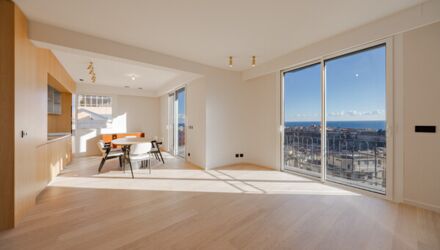
Located on the 8th floor of a building with elevator, the Palais Belvédère is located in the sought-after area of La Rousse - Saint Roman. This 3-room apartment of 63 m² offers high ceilings and a beautiful view. A functional and ideally located apartment, close to the Boulevard d'Italie and the Larvotto. This apartment to refresh offers great potential for renovation to create an interior in its image.
 Sole agent
Price on request
Palais du Printemps · Moneghetti
Magnificent renovated penthouse with sea views - Le Palais du Printemps
In the heart of the Moneghetti, discover this duplex penthouse, a perfect fusion between the elegance of a bourgeois building and a contemporary renovation. Climb up its internal staircase and let yourself be surprised by a large roof terrace, equipped with a pergola and a summer kitchen, revealing a breathtaking view of the Mediterranean Sea.
 10 300 000 €
Villa Minerve · Carré d'Or
6 ROOMS - VILLA MINERVE
In the heart of Monte-Carlo, a stone's throw from the Carré d'Or, this superb 6-room apartment of 185 m² under the law 887 offers a breathtaking view of Port Hercule.
Recherches fréquentes
Les derniers articles



Contact our real estate agency in Monaco





In which district would you like to search for your future apartment?