Monaco Real Estate 2026: capital concentration reshapes the market
Publié par Eugenia Petrini le 21/02/2026
Temps de lecture
10
min.
Monegasque Real Estate Market
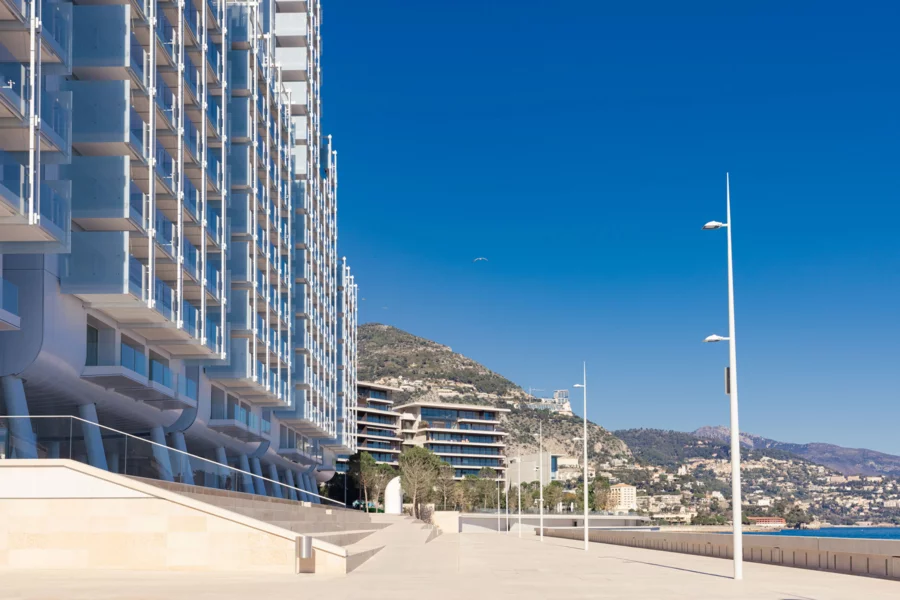
In 2026 Monaco’s property market remains resilient yet enters a phase of strategic reshaping, characterised by a polarisation of values, shifting buyer profiles and a redefinition of its urban hubs.
Discover our selection of apartments
for sale in Monaco
for sale in Monaco
Studios, one- to five-bedroom apartments, penthouses and prestigious properties
The IMSEE has just published its 2025 Real Estate Observatory. Each year I read it carefully, not only for the figures it consolidates, but in the light of the transactions, patrimonial arbitrages and international flows we accompany on a daily basis.
I have worked in real estate for 47 years, 32 of them in Monaco’s property market. Cycles exist, yet Monaco does not operate according to the norms of conventional residential markets. Land scarcity, institutional stability and concentrated capital create structural dynamics rooted more in the long term than in speculation.
The 2025 figures confirm this singularity and align with our own analyses. We have noted in particular a marked revival of the rental market, with rents rising by 8 % to 15 % during 2025. We have also analysed that residential property sales in Monaco leapt by 51.7 % in volume in the second quarter of 2025. The annual report now confirms this momentum: with €5.9 billion in transactions and 493 sales recorded, the market remains at a historically high level. The average price reaches €57,569 per square metre, consecrating Monaco as the most expensive residential market in the world.
These indicators, however, are not sufficient to grasp fully what occurred in 2025. Behind the apparent solidity lies a deeper recomposition of values, hubs and buyer profiles. This editorial seeks to complement the public data with a field-based reading in order to inform the decisions of future residents of the Principality with precision.
Key takeawaysMonaco Real Estate 2026
The Monaco Real Estate 2026 market is entering a phase of strategic hierarchisation after a record year. Capital concentration is durably redefining the geography and values of the territory.
- ▸ €5.9 billion in transactions: historically high level confirmed
- ▸ Larvotto exceeds €71,000/m² and redraws the price hierarchy
- ▸ Sales above €50 million now structure the ultra-prime segment
- ▸ The Billionaires’ Triangle formalises the new strategic hub
- ▸ The FATF grey list has not slowed international flows
- ▸ 2026 supply is mechanically constrained on a territory of 2.08 km²
- ▸ Growth is more measured, yet sustained by strong international demographic pressure
Strategic advice: In a market now structured by capital concentration, the challenge is no longer to anticipate a downturn but to identify assets located at the heart of strategic hubs capable of capturing value durably.
The Billionaires’ Triangle: when the Carré d'Or extends to Mareterra
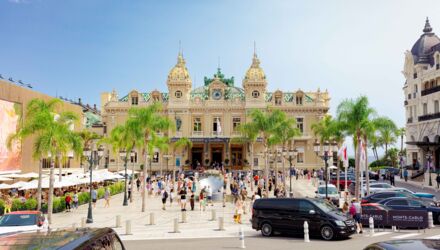
In this editorial I introduce the term Billionaires’ Triangle to describe the strategic axis formed by the Casino de Monte‑Carlo, the Metropole and Mareterra, now at the heart of Monaco’s ultra-prime segment.
The year 2025 marked a decisive geographical inflection for the Monaco market. One year after Mareterra’s completion in December 2024, a structural recomposition is redefining the centrality of the Carré d’Or in the Principality’s real estate economy.
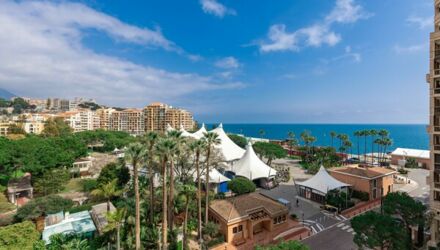
Public data are explicit. Larvotto, driven by Mareterra, crosses the €70,000 per square metre threshold for the first time, reaching €71,167. It thus becomes Monaco’s most highly valued district.
This statistical average must, however, be nuanced by field observation. On certain very specific units of the offshore extension, the observed levels exceed €130,000 per square metre. These exceptional transactions do not alter the overall average, but they redefine the psychological ceiling of the Monegasque market.
Meanwhile, Monte‑Carlo stands at around €54,000 per square metre.
It should be recalled that what is commonly referred to as the Carré d’Or constitutes a non‑administrative micro‑section of Monte‑Carlo, historically bounded by the Monte‑Carlo Star, the Park Palace, the Georges V and the Fairmont. Within this precise perimeter, values now range between €60,000 and €120,000 per square metre, depending on the asset and its rarity.

Observatory figures confirm this concentration. The value of resales in Larvotto reaches €851.9 million for only 13 transactions. Monte‑Carlo simultaneously surpasses one billion euros in resales. Two hubs now dominate the structure of Monaco’s property capital.
In the ultra-prime segment, polarisation is even more pronounced. The average resale price of properties with five rooms or more reaches €29 million in 2025, up 54 % year on year. More than half of new sales exceed €20 million, and five transactions cross the €100 million threshold. These levels correspond precisely to assets located between the Carré d’Or (Monte‑Carlo) and Mareterra (Larvotto).
In recent patrimonial arbitrages I observe, acquisitions above €50 million are now concentrated in Mareterra. At the same time, the banking, social and patrimonial structuring of international residents remains anchored around the Casino and the Metropole.
It is this economic and functional continuity that leads me to propose a new reading.
The Carré d’Or remains a historic hub. Mareterra constitutes a contemporary hub. The two areas are not opposed; they interlock.
To qualify this economic continuity I now use the term Billionaires’ Triangle: a strategic corridor linking the Casino de Monte‑Carlo, the Metropole and Mareterra, within which the bulk of the Principality’s ultra‑high‑net‑worth capital is concentrated.
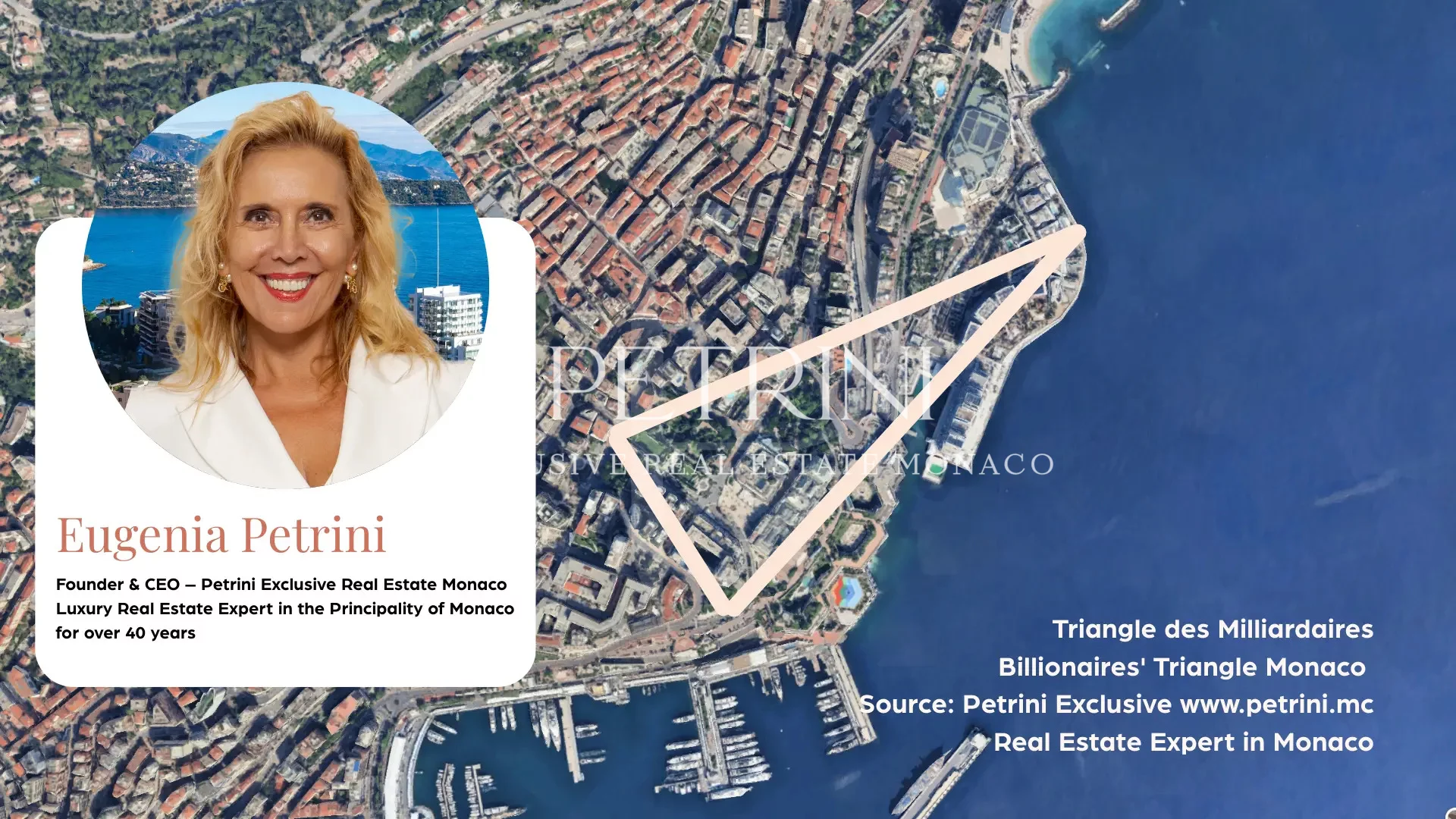
This terminology is not intended to erase the Carré d’Or, rooted for decades in real estate parlance. It aims to formalise a real geography of patrimonial flows that the figures now confirm.
What happened in 2025
Beyond volumes and averages, 2025 marks a more structural shift: the Monegasque market is now organised around an increasing concentration of capital on a limited number of strategic assets.
Public data show a rise in transactions and overall amounts. But the decisive factor is not the increase itself. It is the internal distribution of flows.
A significant share of the value exchanged has been concentrated on very large properties in specific locations, with budgets well above the market’s historical norms. Transactions above €20 million are no longer exceptional. Those exceeding €50 million now structure the ultra-prime segment.
This polarisation does not reflect speculation. It reflects a transformation in buyer profiles.
Today’s new arrivals in Monaco are more entrepreneurial, more international and more active than in the past. They do not buy pieds‑à‑terre. They structure primary residences, family bases and long‑term patrimonial mechanisms. This evolution explains the increase in desired floor area and committed budgets.
In this context, the FATF grey list has not altered the trajectory of the property market. Administrative requirements have intensified, yet buyer flows have not slowed; capital choosing Monaco is already accustomed to regulated environments.
In parallel, the tension observed on the rental market has acted as an accelerator. Faced with limited supply and a significant rise in rents, part of the resident population has shifted towards purchase. This mechanism, specific to Monaco, reinforces the continuity of the cycle rather than creating a rupture.
Thus, 2025 was not simply a dynamic year. It confirmed that the Monegasque market is now structured by the depth of ultra‑high‑net‑worth capital rather than by cyclical fluctuations.
Market prospects for 2026
The year 2026 is unlikely to reproduce the acceleration observed in 2025. Recent major completions have already been absorbed and no programme on the scale of Mareterra will mechanically augment volumes in the short term.
Available new supply should therefore tighten. On a fully urbanised territory of 2.08 km², the creation of additional floor space remains exceptional and depends on complex restructuring or demolition‑reconstruction operations. In the absence of a planned offshore extension in the coming years, the physical framework of the market is now stabilised.
This constraint does not herald a structural slowdown; it implies a more pronounced hierarchisation.
Assets such as the apartments for sale in the Le Mirabeau building, located at the heart of strategic hubs—particularly within the perimeter I have defined as the Billionaires’ Triangle—should continue to attract most high‑end patrimonial arbitrage. Properties elsewhere may experience slightly longer marketing times and more intense negotiation.
In other words, the Monegasque market is entering a phase of selection.
Strategic values should hold. The depth of international capital installed or in the process of being installed in the Principality forms a solid foundation. The profiles observed in 2025—entrepreneurs, business leaders, structured family offices—do not represent opportunistic demand. Their approach is that of principal residences and long‑term patrimony.
In this context, a scenario of market depreciation appears unlikely. Monaco does not function according to the overproduction or excessive leverage mechanisms seen in other international markets, such as Dubai, for example. Structural land scarcity and the high proportion of acquisitions financed with equity limit abrupt adjustments.
Growth may normalise after an exceptional year. It should nevertheless remain structured by capital concentration and sustained international demographic pressure. Recent tax developments in the United Kingdom—notably the challenge to the non‑dom regime—have already accelerated the settlement of British residents in the Principality. At the same time, discussions underway in the Netherlands on tightening wealth taxation could, by 2026‑2027, produce comparable effects. Monaco has historically benefited from these cycles of international capital reallocation. Nothing indicates that this dynamic is about to stop.
Increasing market sophistication
Over the longer term, the trajectory seems clear. Monaco no longer expands horizontally; it densifies, rebuilds and modernises. Approved and ongoing projects testify to a continuous upscaling of the property stock. Each restructuring operation raises the average standard, mechanically enhancing the overall value of the territory.
This gradual dynamic favours strategic locations, architectural quality and large units. It also consolidates the role of players capable of interpreting these shifts with precision.
The year 2025 has thus served as a revelation. It has demonstrated that, despite a demanding international environment and increased regulatory scrutiny, the Principality retains undiminished appeal. Capital has not withdrawn; it has concentrated.
For investors and future residents, the challenge is no longer to determine whether Monaco remains sound. It is to identify, with discernment, the assets likely to capture this concentration sustainably.
It is in this capacity for anticipation—far more than in the simple recitation of official figures—that the real understanding of Monaco’s property market is now played out. Institutional reports consolidate the past. Field analysis makes it possible to read the present and identify movements to come before they become statistics. For several years our publications and observations have preceded public confirmations. This demand for strategic, independent and forward‑looking analysis is at the heart of our commitment and today constitutes a differentiating marker in Monaco’s luxury real estate.
FAQ
Monaco Real Estate 2026
FAQ: Monaco Real Estate 2026
- Can Monaco’s property market really decline in 2026?
A scenario of widespread depreciation appears unlikely: supply remains structurally constrained, demand is solvent and predominantly patrimonial, and acquisitions are often financed with equity, limiting sharp corrections. - Why was 2025 a turning point for Monaco real estate?
2025 confirmed a recomposition: value concentrated on a limited number of strategic assets, with an upscaling of budgets and floor areas sought, rather than a simple “record” or “average price” effect. - What is the Billionaires’ Triangle in Monaco?
It is an ultra-prime corridor linking the Casino de Monte‑Carlo, the Metropole and Mareterra, where the highest capital, major patrimonial arbitrages and record transactions converge. - Has the FATF grey list slowed property transactions?
At this stage the effect is chiefly administrative: enhanced checks, more documented files, sometimes extended banking lead times. Buyer flows have not slowed because the target clientele is accustomed to regulated environments. - Why will supply tighten in 2026?
Recent major deliveries have been absorbed and no programme comparable to Mareterra will mechanically feed volumes. On 2.08 km², the creation of new floor space depends mainly on restructuring and demolition‑reconstruction. - Which properties are the safest for investment in 2026‑2027?
Assets located at the heart of strategic hubs, notably within the Billionaires’ Triangle, should continue to attract most high‑end patrimonial arbitrage; elsewhere, marketing times may lengthen and negotiation intensify. - What factors can continue to support international demand?
Cycles of patrimonial reallocation play in Monaco’s favour: after the British effect linked to the end of the non‑dom regime, tax debates in other European countries, including the Netherlands, could generate similar movements by 2026‑2027.
Author

Nos derniers biens disponibles
 Sole agent
3 700 000 €
Sole agent
3 700 000 €
Palais Belvédère · La Rousse - Saint Roman
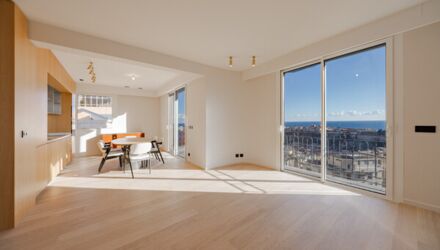
Bright 3-room apartment to renovate on a high floor, a stone's throw from Larvotto
Located on the 8th floor of a building with elevator, the Palais Belvédère is located in the sought-after area of La Rousse - Saint Roman. This 3-room apartment of 63 m² offers high ceilings and a beautiful view. A functional and ideally located apartment, close to the Boulevard d'Italie and the Larvotto. This apartment to refresh offers great potential for renovation to create an interior in its image.
 Sole agent
Price on request
Sole agent
Price on request
Palais du Printemps · Moneghetti
Magnificent renovated penthouse with sea views - Le Palais du Printemps
In the heart of the Moneghetti, discover this duplex penthouse, a perfect fusion between the elegance of a bourgeois building and a contemporary renovation. Climb up its internal staircase and let yourself be surprised by a large roof terrace, equipped with a pergola and a summer kitchen, revealing a breathtaking view of the Mediterranean Sea.
 10 300 000 €
Villa Minerve · Carré d'Or
6 ROOMS - VILLA MINERVE
In the heart of Monte-Carlo, a stone's throw from the Carré d'Or, this superb 6-room apartment of 185 m² under the law 887 offers a breathtaking view of Port Hercule.
Recherches fréquentes
Les derniers articles

Monaco Real Estate Market Review in 2024
More Information

Contact our real estate agency in Monaco



In which district would you like to search for your future apartment?